
AI fleet management: complete guide for 2026
June 1, 2026 · Suso Merino · CEO
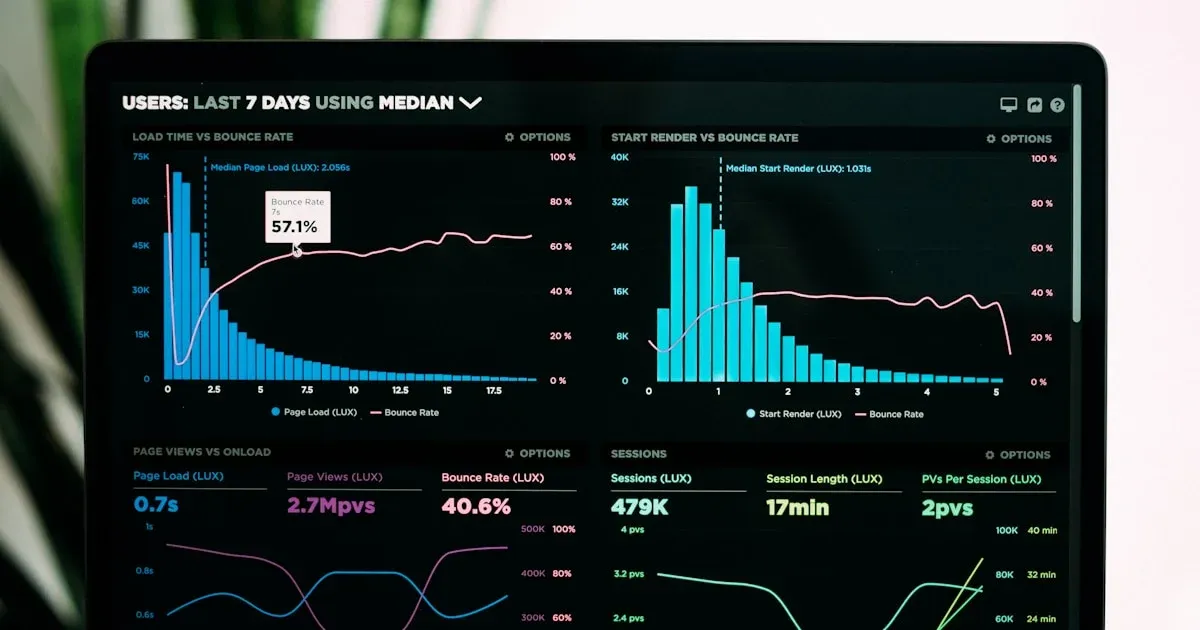
Fleet management with artificial intelligence is no longer a tech-fair promise; it has become the operational difference between a fleet that moves forward and a fleet that spends its time putting out fires. In this guide we explain exactly what it is, how it works, what real savings it delivers and when it’s worth making the jump from classic tracking software.
We’re not going to talk about “disruption” or “digital transformation.” We’re going to talk about breakdowns anticipated two weeks in advance, liters that stop being burned and administrative hours that become productive again.
What AI fleet management is
AI fleet management is the software layer that combines real-time vehicle data (GPS position, engine telematics, battery, driver behavior, CAN-bus data) with predictive models trained on massive historical datasets. The goal is to answer three questions that traditional software can’t:
- What’s going to fail, and when, before the vehicle breaks down.
- Which route is optimal right now, taking into account traffic, weather, restrictions and vehicle type.
- Which driving patterns are costing money and which are just noise.
The difference from classic fleet management is that the system doesn’t just show where each vehicle is: it anticipates, recommends and filters. The fleet manager stops reading a hundred alerts a day and reads the three that matter.
What a system needs to genuinely count as “AI-powered”
Putting an “AI-powered” badge on the product’s home page isn’t enough. A platform with real AI meets, at a minimum:
- Models trained on the customer’s own historical data, not just generic rules.
- Predictions with an explicit time horizon (e.g., “battery <30 days,” not just “low battery”).
- A feedback loop: when a prediction fails, the model is retrained.
- Minimum explainability: the fleet manager can see why an alert was triggered.
If the provider can’t explain these four points, what they’re selling is marketing.
What AI solves in a real fleet
Predictive maintenance
The big silent saving. Industry data compiled by Motor16 in 2025 puts the reduction in serious breakdowns at 40% when AI-based predictive maintenance is applied, along with a 30% reduction in annual cost per vehicle.
What matters isn’t just the financial saving: an avoided breakdown means a vehicle that doesn’t sit idle billing nothing, a customer who isn’t left without service and a workshop that doesn’t get overloaded.
We explain how AI-powered predictive maintenance works in detail in its own article.
Route optimization
Classic solutions calculate the shortest route between points. An AI layer goes further: it considers historical traffic by time slot, weather, access restrictions, actual loading times at each customer and vehicle-specific limitations (weight, height, low-emission zones).
The typical fuel saving is between 15% and 20% during the first six to twelve months, according to industry studies compiled by SoftwareDoIT and Appvizer in 2026.
Smart alert filtering
A classic GPS system generates constant alerts: speeding, long stops, leaving a zone, low battery, communication errors. Most of them are noise. AI correlates and prioritizes them, so the fleet manager sees only what’s actionable.
Driver scoring
Detection of harsh acceleration, hard braking, excessive idling and sustained speeding. Not to spy on drivers, but to identify avoidable cost patterns: a driver with high idling can be burning 800 extra liters a year without anyone noticing.
How much a fleet saves with AI: realistic figures
The numbers vary by industry, vehicle type and starting point, but the established ranges we work with in the industry are:
| Metric | Typical first-year saving | Source |
|---|---|---|
| Fuel | 15% - 20% | SoftwareDoIT 2026 |
| Total maintenance | 22% | Appvizer 2026 |
| Serious breakdowns | 40% | Motor16 2025 |
| Annual cost per vehicle | 30% | Motor16 2025 |
| Administrative hours | 20-35% | Webfleet 2025 |
For a fleet of 50 vehicles with an average operating cost of €28,000 per vehicle per year, the combined saving over twelve months typically falls between €180,000 and €250,000, taking fuel, maintenance and administrative hours together. Payback on the hardware and subscription investment is usually reached before month 9.
Three AI use cases in fleets
Case 1 — Urban delivery fleet of 50 vans
A last-mile fleet of 50 vans delivering across a large metropolitan area. Before implementing AI: 3-4 unexpected breakdowns per week, manual routing with a spreadsheet, average consumption of 8.2 l/100 km.
After six months with AI applied (predictive maintenance + route optimization + scoring):
- Unexpected breakdowns: 1 per week (-66%).
- Average consumption: 6.7 l/100 km (-18%).
- Jobs completed per day: +12%.
Case 2 — Mixed field-service fleet at an SMB
An industrial maintenance company with 22 vans. The main problem: technicians were losing 45-60 minutes a day between jobs because of poorly coordinated routes.
After three months with Trackia: 18% more billable jobs per month with the same workforce, without lengthening the working day.
Case 3 — Municipal vehicle pool
A midsize city council with 130 vehicles (waste collection, urban maintenance, inspection). The main need: justifying spending to the municipal comptroller’s office (Intervención) and complying with the GDPR.
After one year: 28% lower annual maintenance costs, full traceability of use by each civil servant, documented GDPR compliance and savings that could be defended in the city council’s plenary session.
When it’s worth making the jump to an AI platform
Not every fleet needs AI today. A fleet of 3 vehicles run with WhatsApp and a well-kept Excel sheet may not justify the investment. The realistic thresholds are:
- From 5-10 vehicles: the savings in fuel and administrative hours pay for the subscription.
- From 20 vehicles: predictive maintenance shows up on the bottom line.
- From 50 vehicles: AI stops being optional; it’s a competitive necessity.
- Public sector and enterprise: traceability and regulatory compliance are the main drivers.
If your fleet has more than 5-10 vehicles and you find yourself managing it with Excel and messages, now is the time. We explain this in detail in when an SMB should start using fleet software.
How to choose an AI fleet management platform
Five questions you should ask any provider before signing:
- What hardware do you use, and who owns it? If the hardware is proprietary, you’re tied to the provider for life. If it’s Teltonika or another open European standard, you keep your freedom.
- What exactly does the AI predict, and how accurately? A good answer includes time horizons, types of failure and measured hit rates.
- Do you comply with the July 2026 remote tachograph download requirement? If the answer is vague, rule them out. The regulation comes into force and fines can reach €30,000.
- Where is the data, and under which jurisdiction? EU servers and a GDPR data processing agreement are non-negotiable, especially in the public sector.
- What’s the minimum commitment, and what does it really cost to leave? Long minimum terms and hidden migration costs are the industry’s usual nightmares.
Our comparison with Localiza goes deeper into the objective selection criteria against one of the long-established providers in the Spanish market.
Conclusion
AI fleet management is now an emerging standard, not an exception. Fleets that adopt it gain between 15% and 30% in operating margin in the first year; those that wait build up technical and commercial debt against more efficient competitors.
The difference between a platform with real AI and a GPS with marketing comes down to four pieces: models trained on your own data, predictions with an explicit horizon, explainability and continuous improvement. If your current provider doesn’t deliver, it’s time to evaluate a switch.
Want to see how Trackia would apply AI to your specific fleet? Request a personalized demo →
In under 24 hours we’ll show you the dashboard with data similar to your industry and fleet size, and we’ll give you a 12-month savings estimate based on market figures. No lock-in contract and no long commitments. To dig into the technical side, visit our pages on AI capabilities and certified Teltonika hardware.